In the contemporary quest for meaning, many turn to philosophies and spiritual practices to find solace and direction.
One ancient philosophy that has seen a resurgence in modern times is Stoicism. Originating in Greece in the early 3rd century BCE, Stoicism offers profound insights into how to live a good life. But can Stoicism be considered a religion?
Let’s explore this intriguing question.

Understanding Stoicism
Stoicism, an ancient Greek philosophy founded by Zeno of Citium in the early 3rd century BCE, offers profound insights for living a balanced and resilient life.
At its core, Stoicism teaches the development of self-control, fortitude, and rationality as means to overcome destructive emotions.
Central to Stoicism is the dichotomy of control, which emphasizes focusing on what we can control—our thoughts, actions, and reactions—while accepting what we cannot control, such as external events and other people’s actions. This principle helps cultivate inner peace and reduces anxiety.
Stoicism also values living in harmony with nature, recognizing that change and impermanence are natural parts of life.
By accepting the fluidity of life, we can face challenges with greater composure and resilience.
Virtue is another cornerstone of Stoicism. The philosophy encourages practicing wisdom, courage, justice, and temperance.
These virtues guide ethical behavior and decision-making, promoting a life of purpose and integrity.
Practical exercises such as negative visualization, where one contemplates potential hardships, help build mental resilience.
Daily reflection, often through journaling, fosters self-awareness and continuous personal growth.
As we explore whether Stoicism should be classified as a religion, we must consider its distinct characteristics.
Key Elements of Religion: Understanding Its Core Components
Religion is a multifaceted phenomenon that has shaped human culture and society for millennia. At its essence, religion provides a framework for understanding the world, guiding moral conduct, and fostering community.
To assess whether Stoicism can be considered a religion, it’s essential to identify the key elements typically associated with religion:
The key elements of religion—belief in a higher power, sacred texts, rituals, moral guidelines, and community—intertwine to create a comprehensive system that influences personal and societal behavior.
Understanding these components helps us appreciate the depth and diversity of religious experiences worldwide.
Whether one adheres to a particular religion or not, these elements underscore the profound impact religion has on human life and culture.

1. Belief in a Higher Power or Powers:
Central to most religions is the belief in one or more deities or a higher power that governs the universe.
This belief system provides a foundation for understanding existence and the cosmos. In monotheistic religions like Christianity, Islam, and Judaism, this is the belief in a single, omnipotent God.
Polytheistic religions, such as Hinduism and ancient Greek religion, worship multiple gods with distinct roles and attributes.
2. Sacred Texts and Teachings:
Religions often have sacred texts that contain the teachings, narratives, and doctrines central to their belief systems.
These texts, such as the Bible, Quran, Bhagavad Gita, and Torah, are considered authoritative and are used to guide the beliefs and practices of the faithful.
They provide moral and ethical instructions, historical accounts, and spiritual insights.
3. Rituals and Practices:
Rituals are ceremonial acts performed in a prescribed manner, often with symbolic meaning.
These practices, which include prayer, meditation, worship, and rites of passage (such as baptism, marriage, and funerals), help adherents connect with the divine, express their faith, and reinforce community bonds.
Rituals provide structure and a tangible way to engage with religious beliefs.
4. Moral and Ethical Guidelines:
Religions provide moral frameworks that dictate what is considered right and wrong. These guidelines help adherents make ethical decisions and live in accordance with their beliefs.
For instance, the Ten Commandments in Christianity and Judaism, the Five Pillars of Islam, and the Eightfold Path in Buddhism offer comprehensive codes of conduct.
5. Community and Worship:
A sense of community is fundamental to religion. Shared beliefs and practices foster a collective identity and belonging.
Regular communal worship, whether in churches, mosques, temples, or other places of gathering, strengthens these bonds.
Community support systems, charitable activities, and festivals further enhance this sense of unity and purpose.
The key elements of religion—belief in a higher power, sacred texts, rituals, moral guidelines, and community—intertwine to create a comprehensive system that influences personal and societal behavior.
Stoicism and Religion: Exploring the Intersections
The resurgence of interest in Stoicism in recent years has led many to ponder its place alongside established religious traditions.
To determine whether Stoicism can be considered a religion, we need to explore how Stoicism aligns with or diverges from these fundamental aspects.
1. Belief in a Higher Power:
Most religions involve belief in a higher power or powers that govern the universe. This typically includes the worship of deities, who are seen as the creators and sustainers of existence.
Stoicism, however, does not advocate for the worship of gods in the traditional religious sense. Instead, it posits the existence of a rational, ordered universe often referred to as the “Logos” or “Nature.”
This concept of the Logos represents a universal reason or a guiding principle that permeates everything.
For Stoics, the Logos is more akin to an impersonal force or rational structure underlying the cosmos rather than a deity to be worshipped.
This makes Stoicism distinct from theistic religions, where personal gods with specific attributes and wills are central.
The Stoic view is more about understanding and aligning oneself with the natural order and rationality of the universe. This rationalist perspective shapes Stoic thought and practice, emphasizing harmony with nature rather than devotion to a deity.
2. Sacred Texts and Teachings:
Religions often have sacred texts that contain the foundational teachings, narratives, and doctrines essential to their belief systems.
These texts, considered divinely inspired or revealed, provide guidance for adherents and form the basis of religious traditions.
Stoicism, while having foundational writings, does not possess sacred texts in the religious sense.
The primary texts of Stoicism are the works of prominent Stoic philosophers such as Marcus Aurelius, Seneca, and Epictetus.
These writings, including Aurelius’s “Meditations,” Seneca’s “Letters,” and Epictetus’s “Discourses,” offer philosophical insights and practical advice for living a virtuous life.
They are respected and studied for their wisdom but are not viewed as divine revelations. Instead, they are valued for their rational arguments and ethical guidance, making them philosophical rather than sacred in nature.
3. Rituals and Practices:
A defining characteristic of many religions is the presence of formal rituals and ceremonies.
These practices often involve specific actions, prayers, and rites performed collectively or individually to express faith, seek divine favor, or commemorate significant events.
Stoicism, in contrast, lacks formal rituals and ceremonies typically found in religious traditions.
Stoic practices focus on personal introspection and the daily application of philosophical principles.
This includes journaling, where individuals reflect on their thoughts and actions to align themselves with Stoic virtues.
Meditation is also a key practice, helping practitioners cultivate mindfulness and rationality. Additionally, Stoics engage in exercises like negative visualization, where they imagine potential challenges to build resilience.
These practices are introspective and personal, aimed at fostering inner strength and virtue rather than communal worship or ritualistic observance.
4. Moral and Ethical Guidelines:
One of the commonalities between Stoicism and many religions is the provision of moral and ethical guidelines. Religions offer comprehensive frameworks for what is considered right and wrong, guiding adherents in their daily lives.
Stoicism similarly provides a robust ethical framework focused on virtue and living in accordance with nature.
The Stoic virtues—wisdom, courage, justice, and temperance—serve as the foundation for ethical behavior. Stoicism teaches that by cultivating these virtues, individuals can achieve a harmonious and fulfilling life.
This ethical focus aligns with the moral teachings of many religions, which also emphasize virtuous living and ethical conduct.
The difference lies in the source of these guidelines; in Stoicism, they are derived from rational contemplation and philosophical inquiry rather than divine commandments.
5. Community and Worship:
Religious traditions often foster a sense of community through communal worship, gatherings, and shared practices.
These communal aspects help reinforce faith, provide support, and create a sense of belonging among adherents.
However, modern Stoic communities and groups do exist, where individuals come together to discuss and practice Stoic principles.
These gatherings, whether online or in-person, provide a space for sharing insights, supporting each other’s practice, and fostering a sense of community.
While these groups do not engage in traditional worship, they reflect a communal aspect of Stoicism that enhances its practice and dissemination.
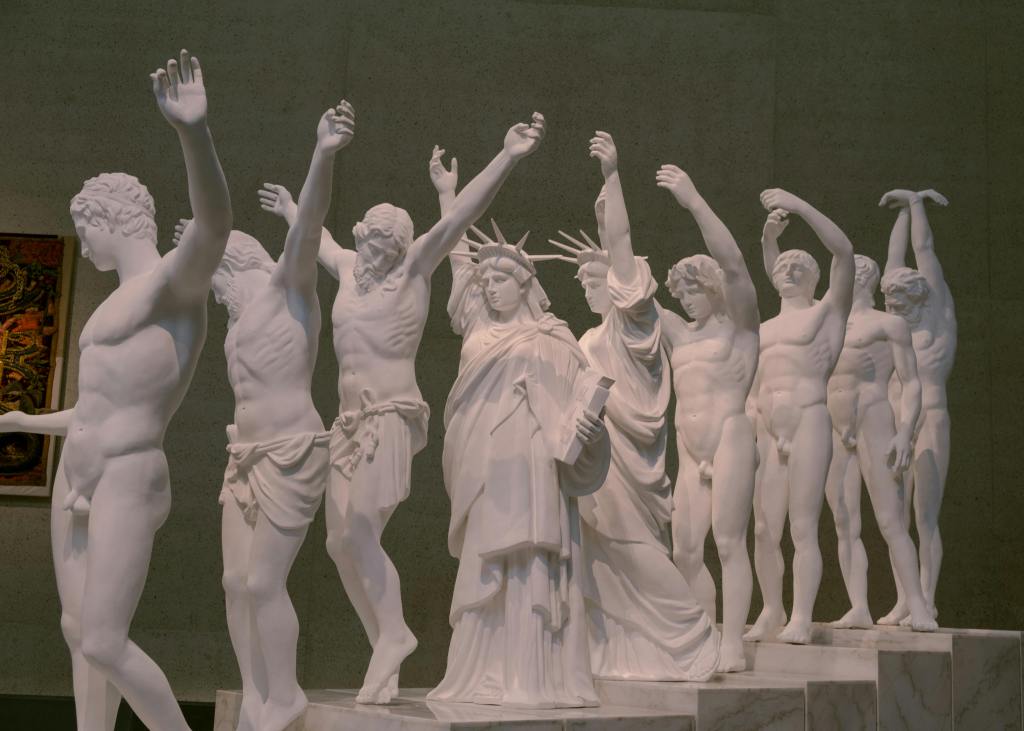
Examining Stoicism through the lens of the key elements of religion reveals both overlaps and distinctions.
Stoicism shares ethical and philosophical guidance similar to that found in many religions but lacks formal rituals, sacred texts, and theistic beliefs.
Instead, it offers a rational and practical approach to living a virtuous life, emphasizing personal responsibility and inner peace.
Ultimately, whether Stoicism is considered a religion may depend on one’s definition of religion. If defined by belief in deities and formal rituals, Stoicism would not qualify.
However, if seen as a comprehensive life philosophy that provides ethical guidance and a sense of community, Stoicism shares many functions of religion, offering timeless wisdom and practical tools for navigating life’s challenges.
Final Thoughts: Stoicism’s Place in the Realm of Belief Systems
While Stoicism shares some similarities with religion, particularly in its ethical teachings and guidance on how to live a good life, it lacks several key elements that define traditional religions.
It does not involve belief in a higher power in the theistic sense, nor does it include formal rituals, sacred texts, or communal worship structures typically found in religions.
Instead, Stoicism can be seen as a philosophy or way of life that offers practical tools for personal development and resilience.
It provides a framework for understanding and navigating the world, much like a religion, but without the metaphysical and ritualistic components.
For those seeking a system of thought that emphasizes reason, virtue, and emotional resilience, Stoicism offers valuable insights.
Whether it is considered a religion or not may depend on one’s interpretation of what constitutes a religion. Ultimately, Stoicism’s enduring appeal lies in its timeless wisdom and practical approach to living a meaningful life.

 Student of Stoicism
Leave a comment